
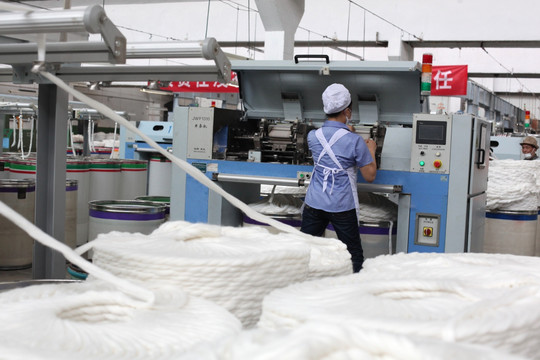
China has long earned its reputation as the "World's Factory." From apparel and fashion accessories to toys, electronics, and daily household items, the country boasts an extraordinarily complete and diversified industrial supply chain. At the heart of this massive manufacturing ecosystem are millions of Small and Medium-Sized Enterprises (SMEs). These factories excel at high-volume production, rapid prototyping, and cost-effective manufacturing.
However, many of these specialized SME manufacturers focus almost exclusively on production. They often lack dedicated international sales teams, and many factory owners and floor managers do not speak English. For international buyers seeking to source, customize, or manufacture goods in China, bridging this operational gap is critical. This is where a local Chinese sourcing agent becomes an indispensable partner in global trade.
The Challenges Facing International Buyers
While China offers unparalleled manufacturing capacity, overseas buyers face several distinct hurdles when working directly with local factories:
1. The Language and Communication Barrier
Most SME manufacturers operate predominantly in the domestic market or work through third-party trading companies. Technical specifications, design tweaks, material requests, and quality standard negotiations can easily get lost in translation when relying solely on automated translation tools or non-fluent communication.
2. Cultural and Business Nuances (Guanxi and Negotiation)
Doing business in China relies heavily on business etiquette, relationship building (Guanxi), and implicit communication styles. Foreign buyers unfamiliar with local negotiation norms may face higher prices, misunderstandings regarding lead times, or difficulty resolving disputes when production issues arise.
3. Supplier Verification and Distance
With thousands of potential suppliers listed across various platforms, distinguishing a genuine direct-manufacturer from a trading company—or identifying reliable factories from substandard operators—is challenging from thousands of miles away. Without on-site verification, international buyers run the risk of receiving goods that fail to meet safety, legal, or quality standards.
The Essential Roles of a Sourcing Agent in International Trade
A Chinese sourcing agent acts as the overseas buyer's eyes, ears, and hands on the ground. By acting as a local representative, a professional agent transforms a risky foreign procurement process into a structured, transparent, and efficient supply chain operation.
1. Supplier Identification and Factory Vetting
Sourcing agents leverage local networks and industry clusters to find factories that may not even have an online presence on English B2B platforms. They perform background checks, verify business licenses, inspect manufacturing equipment, and confirm environmental and labor compliance before any contract is signed.
2. Price Negotiation and Cost Transparency
Local agents understand raw material costs, labor benchmarks, and fair profit margins within specific industrial hubs (e.g., Yiwu for small commodities, Shenzhen for electronics, Ningbo for plastics and hardware). They help foreign buyers secure genuine factory-direct pricing rather than inflated markups often given to foreign buyers.
3. Managing OEM/ODM Customization and Sampling
Customizing products—such as modifying toy molds, creating bespoke apparel patterns, or applying custom branding—requires rigorous project oversight. Sourcing agents coordinate closely with factory engineers to ensure pre-production samples exactly match the buyer’s blueprints and safety regulations (e.g., CE, FDA, REACH).
4. Quality Control (QC) and On-Site Inspections
Quality assurance is one of the agent's most critical functions. A reliable sourcing agent conducts multi-stage quality inspections:
- Pre-Production Inspection: Checking raw materials and components.
- During Production (DUPRO): Monitoring assembly lines to spot defect trends early.
- Pre-Shipment Inspection (PSI): Inspecting finished goods, packaging, labeling, and barcoding before final payment and export.
5. Logistics, Customs, and Supply Chain Coordination
Navigating export regulations, packaging compliance, inland transport, container loading, and customs clearance requires local expertise. Sourcing agents consolidate goods from multiple factories into single shipments, reducing shipping costs and streamlining paperwork for overseas customs clearance.
Conclusion
For international importers, retailers, and brand owners, partnering with a professional Chinese sourcing agent is not an added expense—it is a cost-saving and risk-mitigation strategy. By bridging language barriers, ensuring strict quality control, and managing local factory relationships, sourcing agents empower global businesses to harness China’s immense manufacturing power efficiently and securely.